CityLimits · Op-Ed
A Slow But Accelerating Crisis — Preserving Affordable Housing for Up to 1.4 Million NYers
By Michael D. Lappin · February 8, 2022
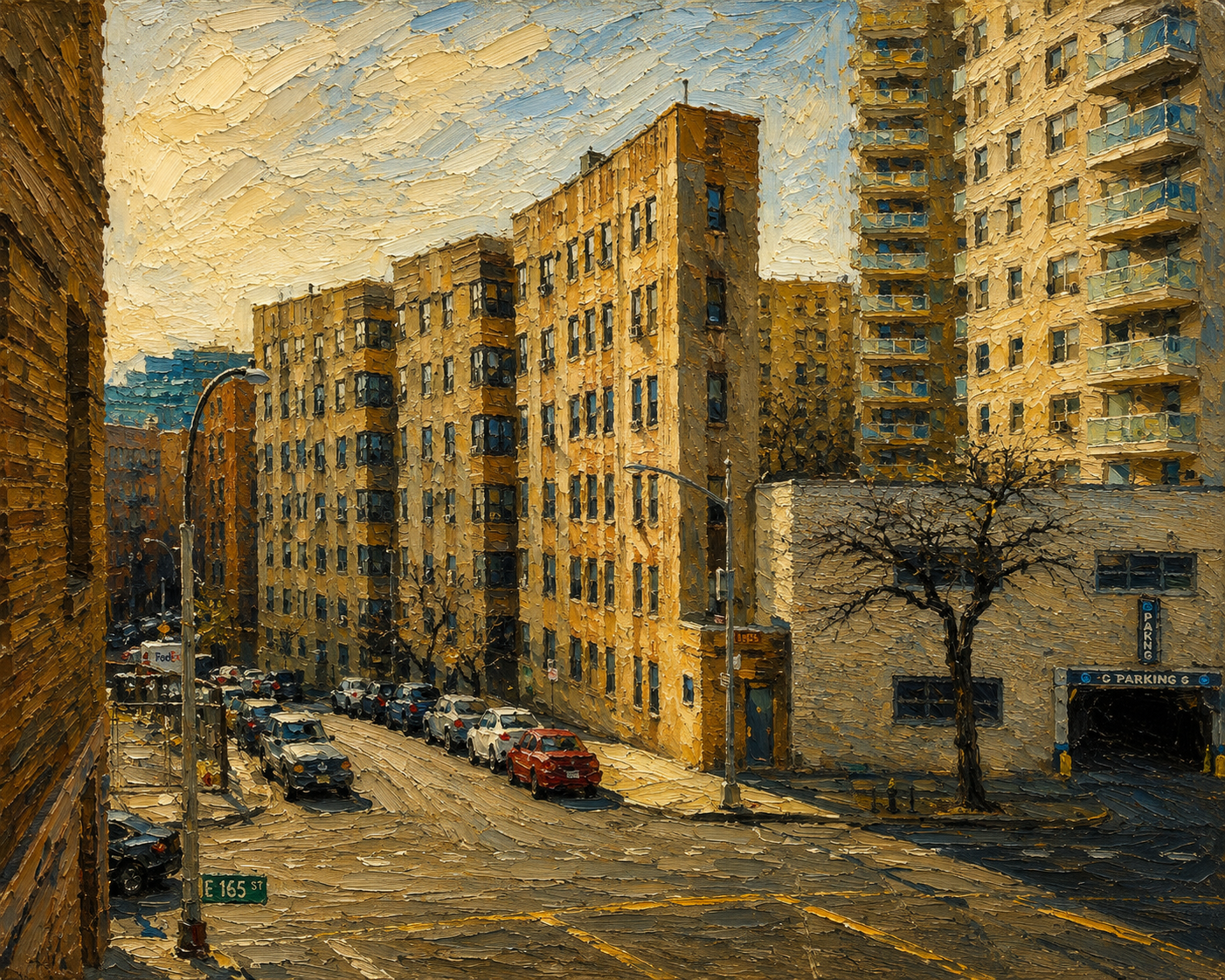
The same combination of streamlined pension fund investments and public subsidies that worked so successfully in the 1980s and early 1990s needs to be reinvigorated to preserve the city's enormous reservoir of privately-owned affordable housing.
Lost in New York City's tempestuous legislative battles over rent regulation is the fact that the largest number of low- and moderate-income residents in the city live in privately owned rent-regulated housing. This often leads to a blind spot in city housing policy.
According to the last New York City Housing and Vacancy Survey (HVS), an estimated 1.4 million low- and moderate-income New Yorkers live in privately owned, rent-regulated housing. These tenants — retirees, service workers, new immigrants — live in households earning up to 80 percent of the area median income. The HVS reports the area median income for all rent stabilized households in 2017 at $44,560 a year. These men, women and children reside in those four-, five- and six-story apartment buildings that are ubiquitous in lower income neighborhoods in The Bronx, Brooklyn, Queens and upper Manhattan.
Much of this housing is 60 years old and older. (The City's Rent Guidelines Board reports that 700,000 rent-regulated apartments were built before 1947.) Many of the buildings have fewer than 50 units and are vexed by a variety of serious physical and financial deficiencies. Some of these troubles — poor heat, leaky plumbing, drafty windows — are incubators of health problems. Many owners lack the resources to address those needs. They may have the funds to fix plumbing leaks, but not the capital to replace the plumbing that causes the leaks — plumbing that can be as much as 70 years or older.
The Tenant Protection law of 2019 codified stricter limitations on the ability of owners to raise rents to pay for improvements. Soon after, the COVID-19 pandemic made it difficult for many tenants to maintain their rent payments. The compounding effects of these two realities have created a slow-moving but accelerating crisis for affordable housing. Major repairs are left undone, and cash flows are often insufficient for a building's proper maintenance and operation.
A city pension fund program, initiated in 1983, was specifically designed to finance the renovation of deteriorated rental apartment buildings in lower income neighborhoods. Supported by New York State mortgage insurance, the pension investments financed the restoration of a wide range of apartment buildings and worked uniquely well for small buildings with owners of limited resources. Two percent of the pension funds' assets were committed for long-term, fixed-rate mortgages, with an interest rate priced at the market, with a two-year rate lock while the capital improvements were made.
Recognizing that these buildings would need some public subsidy — and that many owners lacked the experience to deal with complex government processing — a system evolved whereby these investments were coupled with streamlined city subsidy programs. The program's goal: to restore a building's physical and economic health while keeping its apartments affordable. The pension funds filled a critical gap as most conventional long-term lenders viewed this market as too complicated and too unprofitable. For many years after its inception, the Community Preservation Corporation was the primary user of the program, using its "one-stop-shop" to originate construction loans for predominantly small properties.
Over time, city subsidy programs have grown more complex, with more mandates and more layers of review, all of which result in long, drawn-out and costly processing. While some larger properties can absorb these added costs, many small property owners have neither the time nor the resources to deal with these programs. Instead, these owners may opt for short-term fixes which may be deleterious both to their building's physical integrity and their tenants' living conditions.
The same combination of streamlined pension fund investments and public subsidies that worked so successfully in the 1980s and early 1990s needs to be reinvigorated to preserve the city's enormous reservoir of privately-owned affordable housing, sometimes referred to as "naturally occurring affordable housing." It can work equally well for non-profit owned housing.
The potential number of apartments that can benefit from this program is well over 500,000. However, not all buildings will work. If a building is overfinanced, for example, program eligibility may require a discount of its existing debt and/or an infusion of equity. More troubled buildings might be voluntarily sold, or be subject to a forced sale through debt or tax foreclosure.
To maximize the number of buildings that might work, four steps are needed. First, the city should allocate from its housing budget a sizable amount of subsidized funding and staff resources to preserve this housing. Second, this effort should focus on three outcomes: preserving the building's physical integrity through necessary renovations of its major mechanical and weather-tightening elements; stabilizing its long-term economics; and keeping its rents affordable. Third, these programs must be streamlined in order to lower costs and, most importantly, to make them easily accessible to small property owners. Fourth, the city should partner with construction lenders to reach scale.
Michael Lappin is the former CEO of The Community Preservation Corporation (1980-2011), which played key roles in the revitalization of Washington Heights and the restoration in the Bronx of the 12,271-unit Parkchester housing complex. He is head of M Lappin & Associates, a provider of advisory services for affordable housing.