CityLimits · Op-Ed
What the Workout of the Signature Bank Loans Can Teach About Preserving Affordable Housing
By Michael Lappin · April 11, 2024
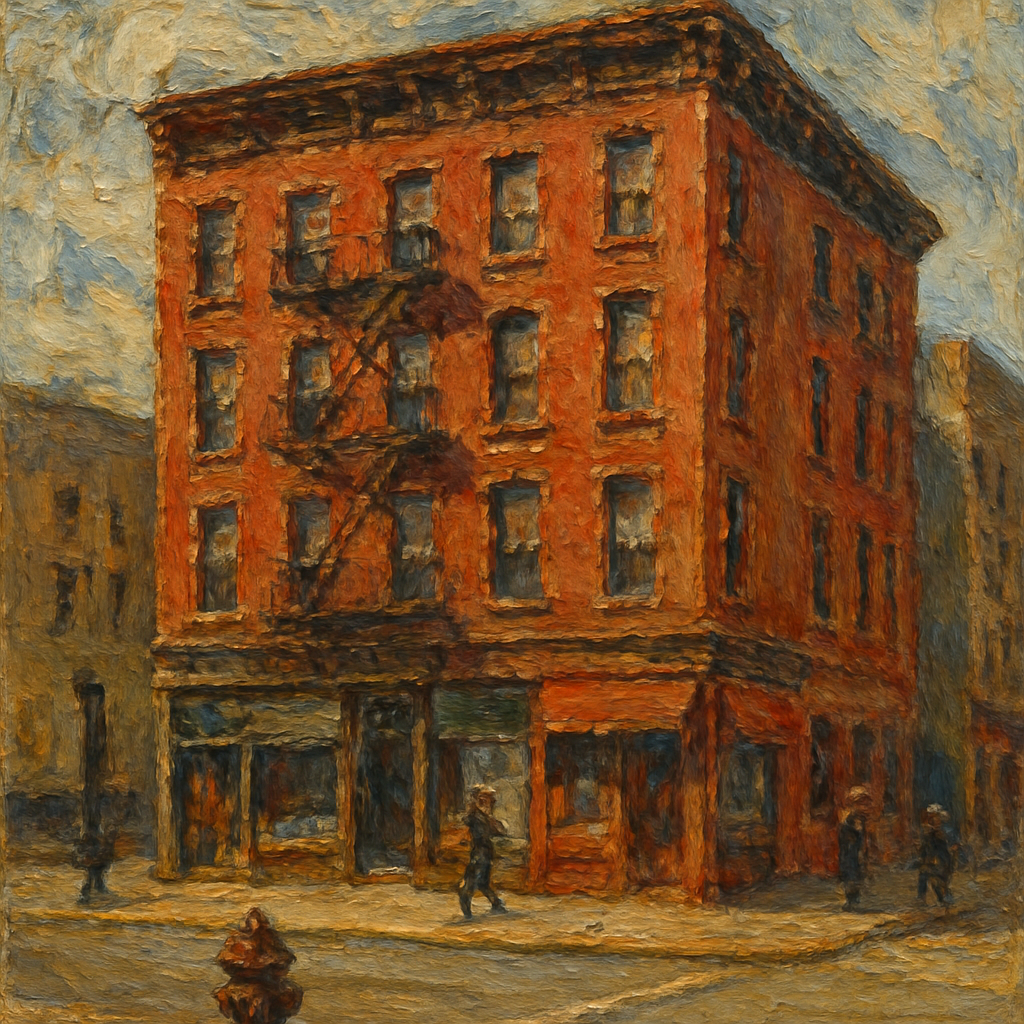
Will the Signature buildings be viewed as a one-off, or the tip of an iceberg of a more endemic problem?
The privately owned rent regulated housing stock is arguably the largest source of affordable housing in the city. Its preservation should be a central feature of the city's housing policy. Yet, it often falls prey to adverse legislation that does not balance the need to physically and financially maintain this housing, while keeping it affordable.
The Housing Stability and Tenant Protection Act of 2019 sought to strengthen tenant protections by eliminating the ability to decontrol rent stabilized apartments and tightening allowable rent increases relating to vacancies and apartment and building renovations. These changes had dramatic effects on both ends of the rent stabilized market.
At the high end of the market, the 2019 law undermined the financial assumptions of some lenders and owners, who expected decontrolled rents to be raised to market to support their investments. This contributed to the fall of Signature Bank and to recent problems of New York Community Bank: both had large portfolios of loans secured by rent stabilized apartments. It also resulted in high profile properties being sold at large losses.
What hasn't received as much attention is how the rent restrictions created an ever-tightening tourniquet on the cash flows of the most vulnerable segment of this housing — the vast majority of apartments, many built before 1974, located in low and moderate-income communities. Long established programs that could provide a safety net for this housing have diminished and became more difficult to use.
There are almost 1 million privately owned, predominantly for-profit, rent stabilized units in New York City, 760,000 of which were built before 1974. The median household income of the pre-1974 apartments is about $47,000 per year. The pre-1974 buildings, many of them small (less than 50 units), are heavily concentrated in low-income neighborhoods and most reliant on revenue from rent stabilized units. These buildings need continual access to capital to repair and replace their aging systems.
These same low-income buildings are disproportionately affected by the inflation of operating costs, like insurance, and by higher interest rates as mortgage loans come due — currently increasing from 3-4 percent to 7-8 percent. The cumulative effects will leave less money for maintenance and an inability to borrow funds for capital improvements, resulting in worsening living conditions for residents. These conditions are leading to the slow but accelerating deterioration of rent stabilized apartment buildings in low and moderate-income areas.
The Federal Deposit Insurance Corporation's (FDIC) takeover of Signature Bank, with its statutory requirement to preserve affordable housing, can provide a window to the cost and approach to preserve this critical housing. To fulfill that requirement, the FDIC has entered into a joint venture with a partnership of Related Fund Management, the Community Preservation Corporation (CPC), and Neighborhood Restore, collectively named Community Stabilization Partners (CSP), to work out 868 mortgage loans totaling $5.6 billion secured by 35,000 apartments.
CPC's history of preserving affordable housing centered on balancing three objectives: restoring a building's physical soundness, restructuring its economics to achieve long-term financial stability, and maintaining affordability for its residents. First, CPC would work with the owner to define a scope of work that could restore a building's physical integrity, focusing upon the building's mechanical systems, its exterior envelope, and other health and safety measures.
Second, regulated rents could be increased through major capital improvements (MCIs) to pay for renovations, but for older lower income buildings, renovations would require increases likely to be unaffordable to many tenants. To keep rents affordable, two city programs had been used — the as-of-right J-51 real estate tax reduction, and long-term secondary loans with interest rates as low as 1 percent — plus, if available, federal rent subsidies.
For almost all such transactions, CPC accessed a new mortgage to replace the existing debt, often at a discount, through a program it had developed in 1983 with the city's public employee pension funds. The pension funds would provide a long-term fixed rate mortgage (30 years), insured by the city or state mortgage insurance program. The final product — a fixed up building, with long term reduction of real estate taxes and long-term fixed rate financing — held out the promise of sound and stable affordable housing for another generation of residents.
Perhaps most importantly, CPC worked with the city, state and pension funds to organize these programs in a package that was easily accessible to owners of small, low-income buildings. CPC became the one-stop shop for these owners, who could never navigate the maze of multiple city and state programs on their own.
A challenge for the Signature workout team is that many of the tools used by CPC have frayed, while at the same time buildings are subject to more mandated public costs, most prominently those related to energy conservation. The as-of-right J-51 program expired, and was reintroduced with provisions that limit its usefulness. Public subsidies are both under-funded and come with complicated processing requirements.
How might this impact city and state policy? The 35,000 units of the CSP workout is but a drop in the bucket regarding the preservation of this affordable stock. Will the Signature buildings be viewed as a one-off, or the tip of an iceberg of a more endemic problem? Herein lies a grand opportunity: the city, working with lenders with large portfolios of rental properties, might use the same public tools that would be available to the FDIC team to preemptively preserve their troubled properties in designated low and moderate-income neighborhoods. This can be a win-win all around — for tenants, owners, lenders and the city.
Michael Lappin is the former CEO of the Community Preservation Corporation (1980-2011). During his tenure, CPC financed and/or developed the preservation and building of over 92,000 affordable apartments in New York City.