Millennial Housing Commission · Speeches
Preserving Affordable Multifamily Housing: Statement Before the Millennial Housing Commission
By Michael D. Lappin · July 24, 2001
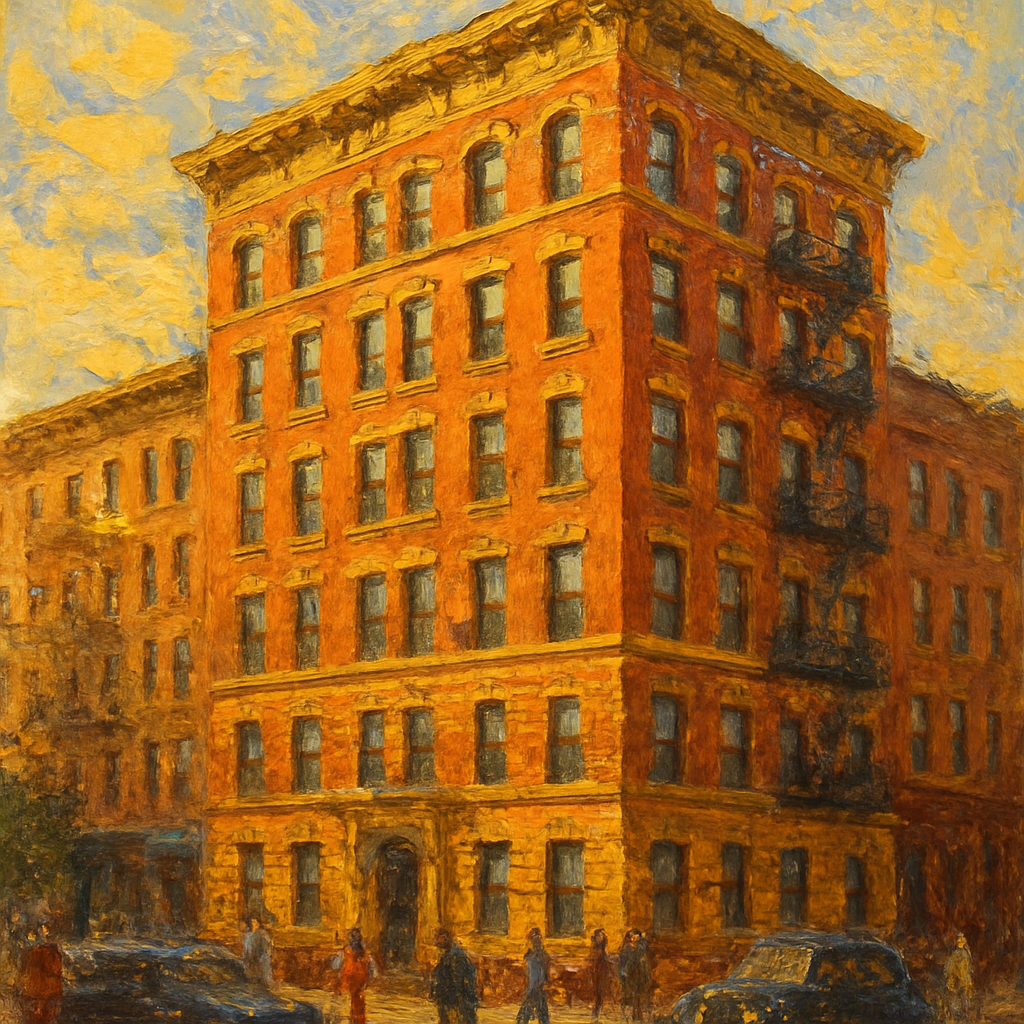
A persistent issue for our urban areas is the preservation of affordable multifamily housing. How can we create a system for reinvesting in our aging stock that both preserves it and keeps it affordable?
Statement of Michael D. Lappin, President, The Community Preservation Corporation, before the Millennial Housing Commission. New York, NY — July 24, 2001.
Thank you for the opportunity to speak about strategies for preserving affordable multifamily housing. I am Michael D. Lappin, President of The Community Preservation Corporation. CPC was founded 27 years ago by New York's major banks, and later insurance companies, to invest in the preservation and development of affordable housing. Since our founding, we have invested over $2.7 billion of public and private funds for the restoration and stabilization of almost 85,000 housing units. Drawing from lessons learned by CPC in New York, I will outline the elements of a preservation system with the capacity to induce high-volume redevelopment of aging multifamily apartment buildings.
A persistent issue for our urban areas is the preservation of affordable multifamily housing. With our housing stock growing older, and the cost of replacing it beyond the reach of many of its residents, our urban neighborhoods have a continual need for new capital for upgrading. How can we create a system for reinvesting in our aging multifamily housing stock which both preserves it and keeps it affordable? Three elements for such a system will be discussed: organizing the preservation process for large scale redevelopment; accessing the capital markets to support such redevelopment; and maintaining a regulatory backdrop for such reinvestment.
The term preservation has been used almost exclusively in the context of publicly assisted housing and the problems concerning expiring governmental contracts and use restrictions. However, governmental housing provides a relatively small percentage of low and moderate income housing. The larger market that forms the core of most older urban areas is the privately owned multifamily stock.
How do we reach the private owners of the older multifamily stock and induce their participation in preservation programs? Most public programs for building renovation focus on solving the problem of affordability, and largely neglect the problem of marketing the programs to existing building owners. Yet any meaningful scale of redevelopment depends on inducing the wide participation of these owners. Many are inexperienced and have limited financial resources, and are caught in a situation where the fragile economics of their buildings is inadequate to cope with its repair and replacement needs. In a city like New York, many owners are immigrants and have little experience with government or institutional lenders.
Confronting these inexperienced owners is the complexity of preserving affordable housing. There is an array of public programs — below market loans, tax credits, real estate tax abatements, rental subsidies, grants, mortgage insurance — each addressing separate problems, each with its own requirements, and often each administered by separate agencies.
Is there a way to change this and induce high volume redevelopment? One model that accomplished this was CPC's preservation efforts in the late seventies and early eighties in New York City. In the mid-seventies, the City was in economic crisis. Privately owned apartment buildings were deteriorating and being abandoned at a rate reaching 25,000 units a year. The banking community established CPC to work with government to organize various governmental programs supporting renovation to effectively leverage private financing. The focus was to direct public and private resources to upgrade deteriorating, but still habitable buildings, before they reached the point of being abandoned.
The "one stop shop" that resulted from this collaboration was accomplished through certain delegations of authority for critical public programs to CPC. In effect, CPC became the agent for various City programs that supported housing preservation. This enabled CPC to provide private construction and permanent financing, and public subsidy in one stop. Added to this, CPC found it necessary to give technical guidance to property owners in the renovation process. This very complicated process was organized in a way to make it accessible to the inexperienced owners in the target neighborhoods.
CPC's experience is that when there is a strong alignment of interests and priorities between public and private sectors, such a system can be established. Public entities must be willing to cede certain authorities with reasonable oversight to private lenders, and private lenders must be willing to abide by the conditions set by the public sector. If adopted, the potential for private/public partnerships to organize the rebuilding process can be fully realized.
How can a finance system be created to support this organized preservation effort? Three factors are critical: historical information on loan performance, standardization and volume. To remove obstacles to a secondary market, a local mortgage insurance program can be created. The insurance program initially attracted long term investments by thrifts and commercial banks acting through CPC. As the soundness of the investments and the insurance was demonstrated, additional investors, including the large city and state public pension funds, joined the redevelopment efforts. After about 10 years of experience, the State system received a "AA" rating from two top rating agencies, and the City received slightly lower ratings, but still investment grade.
The system which has brought billions of dollars into New York's older multifamily stock could be adopted by other governmental jurisdictions around the country. A mortgage insurance program requires three essential elements: proper top loss coverage; proper capitalization of loss reserves; and proper claim payment mechanisms. For the most politically difficult element — the capitalization of the loss reserve — New York offers two alternatives. The State program enacted a one-quarter point surcharge on the mortgage recording tax to support the reserves, creating a renewable funding stream. The City program supports its reserves from dedicated amounts of funds from the surpluses of its housing finance agency.
The rehabilitation of low and moderate income multifamily housing is highly sensitive to changes in the governmental and economic environment. Changes in entitlement programs, energy deregulation, new communication technologies, and shifts toward user fees can all affect the income and viability of these properties. Each element in a preservation system should strive to be sensitive to the end user, lest the complexity retard the scale of restoration efforts.
In sum, aging privately owned multifamily housing forms the core of many of our nation's urban areas. Preserving this housing through renovation is the most viable option to maintain its affordability to low and moderate income residents. To accomplish preservation, a system must be organized that integrates private financing and public support that is accessible and can assist owners of these properties. This means unprecedented cooperation between the public and private sectors for the creation of "one-stop-shops." The organization of local mortgage insurance, reinsured by nationally rated financial institutions, can assure adequate flows of private capital to support the preservation system. This system also needs a supportive regulatory environment that is sensitive to the impact of various requirements on the economic viability of low and moderate income housing.