CityLimits · Op-Ed
The Lessons We Learned From Saving Parkchester
By Michael Lappin · August 22, 2018
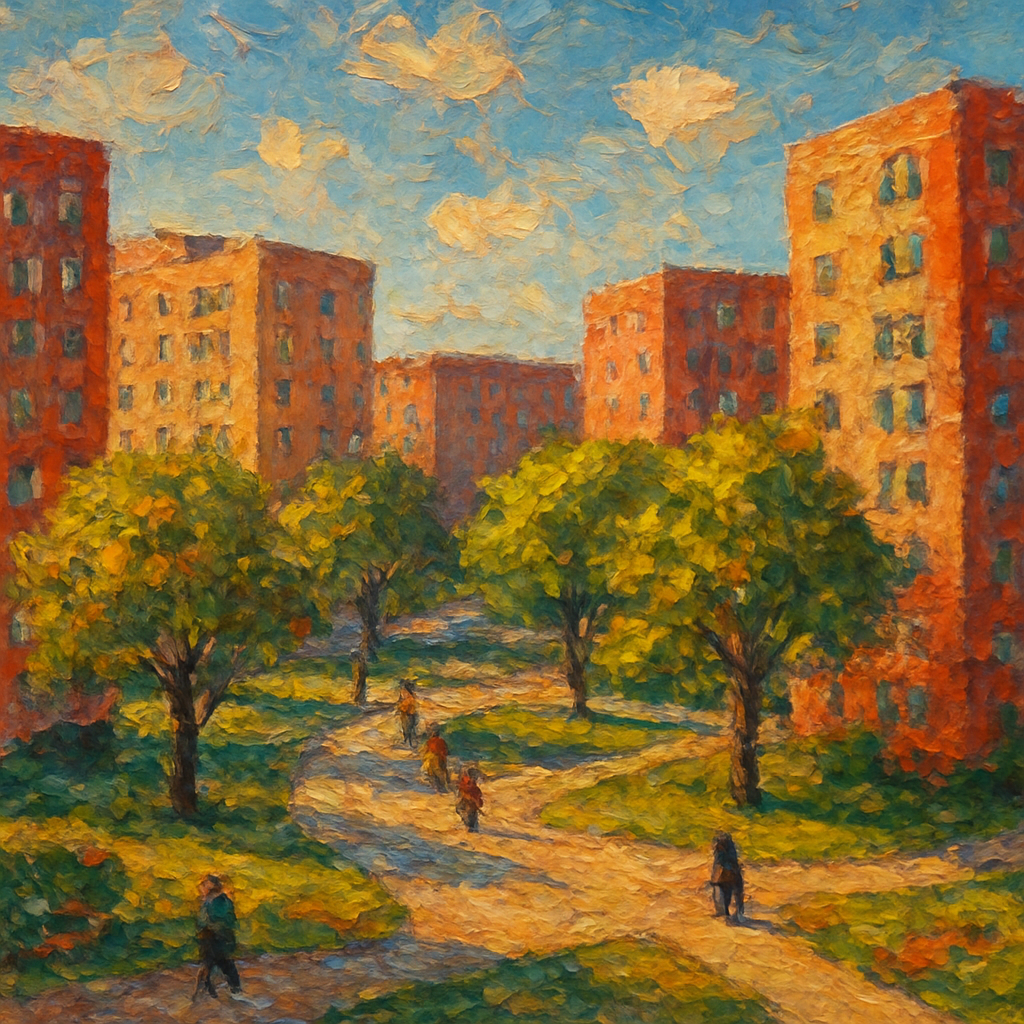
This summer marks the 20th anniversary of the beginning of the restoration of the largest privately owned affordable housing property in the country—the 12,271 apartments in the 171-building Parkchester complex.
This summer marks the 20th anniversary of the beginning of the restoration of the largest privately owned affordable housing property in the country—the 12,271 apartments in the 171-building Parkchester complex, located in the southeast Bronx.
The complex is home to more than 40,000 inhabitants who hail from all parts of the globe. Many are first-generation Americans whose parents emigrated from India, Pakistan, Bangladesh, Africa and South and Central America. They join a rich mosaic of other immigrant families from around the world that make up the Parkchester community. These men and women—school teachers, taxi drivers, civil service and blue-collar workers, small entrepreneurs—are the heart of the working and middle-classes of New York. Like all New Yorkers, they strive to raise healthy families and pursue their dreams. But whatever their struggles may be, they have the comfort of knowing that their homes are safe, physically sound and affordable. This was not always so.
Built as a planned community by the Metropolitan Life Insurance Company between 1938 and 1941 for working class families, Parkchester was a precursor to Stuyvesant Town-Peter Cooper Village and even had the same architect. In addition to more than 12,000 residential units, Parkchester also contained five garages and 500,000 square feet of commercial space, including the first branch of Macy's, which opened its doors there in 1941.
In 1968, an investment group headed by Harry Helmsley—the Bronx-boy turned real-estate tycoon—purchased the Parkchester apartment complex and proceeded to convert it to two condominiums. The Helmsley partnership's attempts to convert the property from a rental to a condominium structure was contentious, creating a combustible mistrust between the Helmsleys and the residents. This mistrust carried over to efforts by Helmsley to upgrade the property as people feared shoddy improvements and unaffordable housing-cost increases.
By the mid-1990s, the entire complex was plagued by severe problems. Multiple plumbing breaks were occurring—up to 60 breaks a day were reported—thousands of casement windows were warping, and the 15 amps of electrical service was inadequate to support modern-day appliances. The complex had deteriorated to a point where Parkchester earned the dubious distinction of being called out by the New York Post as one the 10 worst buildings in New York City.
With no obvious solution, Helmsley wanted out. In the winter of 1994, I was approached as to whether the Community Preservation Corporation (CPC)—a nonprofit finance company which had distinguished itself as a leader in preserving and building affordable housing throughout New York City—would be willing to purchase the Helmsley holdings at Parkchester. After visiting Parkchester to assess its challenges, I was struck by the fact that it needed the same kind of moderate rehabilitation that CPC had been doing for individual buildings since its founding in 1974.
With the approval of CPC's board, an offer was made to purchase Helmsley's Parkchester assets. After a lengthy assessment of the property's insults and injuries and lots of negotiations, CPC reached an agreement to buy the Helmsley interests for $4 million. Parkchester would be CPC's first venture into development—and what a place to start!
It was clear we needed a partner to take on this task. After interviewing several property owners, we selected Mort Olshan, someone that CPC had worked with to renovate properties he owned in Washington Heights. A renovation plan was developed and a talented team assembled to take on the residential construction, management and the retail properties.
CPC took the lead in organizing over $210 million of construction funds from its own credit resources and from several CPC member banks. Next, we advocated and obtained special legislation for Parkchester from the state and city that essentially eliminated real-estate taxes on the residential units for 17 years. Recognizing the importance of preserving this iconic housing complex, the legislation passed unanimously in the State Senate and Assembly, as it did in the City Council.
For the project to go ahead, however, each condominium would have to approve the plan with an absolute two-thirds vote by all the condominium owners. A vigorous battle ensued to obtain the approval, punctuated by physical threats, smears, and efforts to pit the various ethnic groups against one another. But the fight was joined by courageous residents who recognized the benefits that would follow.
The local clergy displayed similar courage and unflagging support. And all local political leaders—most prominently and vocally Borough President Freddie Ferrer—provided unbridled support.
The purchase was finally consummated in the summer of 1998, with work on the South Condominium starting a few months later. After six years of extensive work that included replumbing the entire property, removing asbestos, installing more than 70,000 new casement windows, upgrading the electrical system to enable air conditioning for the first time, and countless other repairs, the renovation of Parkchester—more of a rebirth, really—was completed.
By most measures, the project was an overwhelming success. Upon completion, Parkchester provided sound housing at an affordable price for another generation of owners and renters. The new sponsors secured approximately $250 million of private debt to pay for the renovations backed by only their Parkchester holdings. Existing renters were protected by rent laws and saw only modest rental increases.
For the more than 5,850 Parkchester non-sponsor condominium apartment owners, the value of their properties rose from a low of $20,000 to $30,000 for a two-bedroom unit in 1998 to between $185,000 and $225,000 today. This translates into an increase of the collective net worth of these predominantly working-class families of almost $1 billion dollars.
Parkchester's revival was accomplished without any direct public subsidy. Still, two public actions were critical for its success: first was the legislation that extended real-estate tax relief specific to Parkchester; and second, the State of New York Mortgage Agency insured the permanent financing, provided by Freddie Mac, at a time when such an investment was considered risky.
And what lessons might we learn from Parkchester? Timely and decisive action, and the availability of capital, allowed CPC to take advantage of a downturn in the economy to buy Parkchester at a bargain price. This enabled the property to be restored, yet remain affordable to its moderate-income residents for another generation of use.
Parkchester's rebirth reflects the best of New York and stands as a lesson for communities throughout the country seeking to preserve and enlarge their stock of affordable housing.
Michael D. Lappin, a New York-based expert on affordable housing and urban development, served as CEO of the Community Preservation Corporation (CPC) from 1980-2011. He currently heads MLappin & Associates LLC which provides advisory and development services for affordable housing.