CityLimits · Op-Ed
To Combat Gentrification, NYC Needs Simpler & Speedier Policies
By Michael Lappin · June 26, 2019
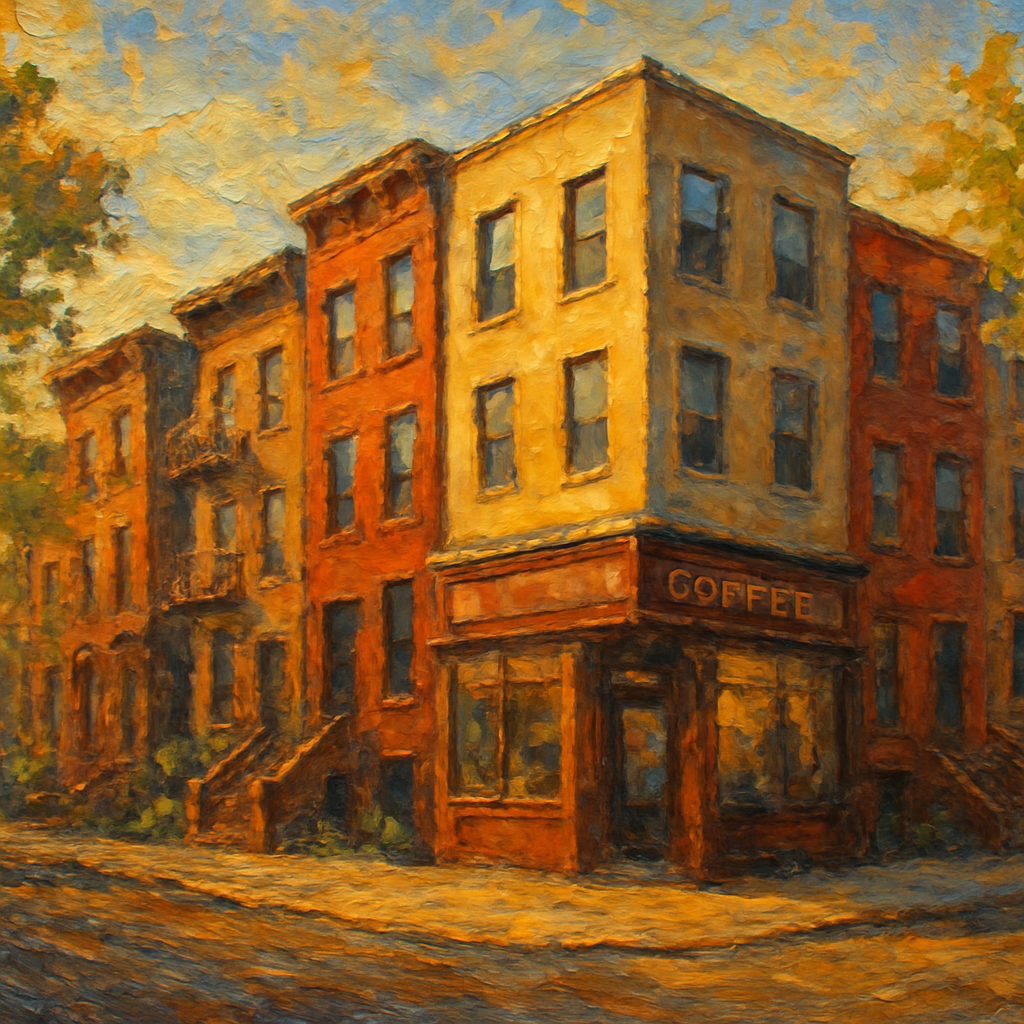
An active public program incentivizing an affordable alternative to market rate housing might create and preserve a portion of the neighborhood's housing for moderate-income households.
A sure sign that a neighborhood is undergoing gentrification is the ever increasing residential construction activity on a street. Nearby is the new coffee shop, and perhaps a dog grooming salon on the corner. Drive throughout Brooklyn, upper Manhattan, Jamaica and other areas of Queens, and now, even parts of the South Bronx: new buildings are popping up everywhere. Much of this building is on tree lined streets with small three-, four- and five-story apartment buildings. Some are condos, many rentals, but all foretell a changing social mix as more affluent households move into the neighborhood.
While such changes stir a mix of emotions, such trends are not inevitable. In many of these multifamily zoned areas, there are still many opportunities to build — vacant land, the "missing teeth" in residential blocks, underbuilt sites, commercial strips with permitted but unbuilt residential floors. An active public program incentivizing an affordable alternative to market rate housing might create and preserve a portion of the neighborhood's housing for moderate-income households, and a less pricey option for new arrivals.
In the current market, expeditious decision-making is imperative. New York City's real estate markets are swamped with developers and builders looking for the next new neighborhood to be gentrified. To compete, the city must offer an attractive affordable housing alternative, define the neighborhoods where it is available, and implement individual deals in a timely fashion. Existing city programs fall short as they are too encumbered with lengthy processing. However, older programs, like the Participation Loan Program (PLP), which provided secondary loans at rates of 1 percent and rebuilt tens of thousands of deteriorated and vacant buildings, might be adapted to this task.
What are the elements of an attractive affordable alternative to market rate housing? First, a high percentage of financing. The city, using its 1 percent loan program combined with but subordinated to private financing, could fund up to 90 percent of the costs to build an affordable rental building. This is very attractive as most private developments typically get about 70 percent of their costs financed. In exchange, the developer would agree to price rental apartments at an average percentage, say 80 percent, of market rents, rent to income eligible households, and put all apartments into the rent stabilization system for a 35-year period.
Second, to assure long term financial feasibility, real estate taxes would be reduced in accordance with the city's 421a program — almost full tax abatement and exemption for up to 35 years. The city's 1 percent financing would be fixed for up to 30 years and subordinate to a fixed rate long-term private mortgage. The city or state pension funds could be used for the private first mortgage, setting the interest rate at the construction closing to protect the property from spikes in interest rates.
The third and crucial component is expedited processing of the city loan. To move quickly, prototypical building designs and specifications should be approved in advance by the city for typical in-fill residential building sites. As an example, under my tenure at CPC, we developed some 60+ prototypical 8-unit, 4-story buildings that fit in vacant lots in R-6 zoned neighborhoods. These were built between 2004 and 2012 with hard costs ranging from $100 a square foot to $180. Builder/developers who buy a property in a designated area and choose to build the prototype would be eligible for the program's benefits.
If this is to occur in a timely fashion — say within six to eight months after a purchase contract is signed — the city will need banking partners. The bank would vet the credentials and financial strength of the builder/developer, make an acquisition/bridge loan for the property, provide the private funds for the construction loan, and arrange for the long-term loan. For banks to play this role, there should be advanced agreement with the city on underwriting standards, loan documentation, prototype design and specifications, construction cost guidelines, and program parameters.
Finally, the city will have to make a judgment as to what areas to designate for such a program. Some areas may have such high land prices as to render any affordable housing infeasible. However, there are many mid-rise zoned residential areas that might be ideal. To start, the city might select areas near transit hubs which have as-of-right 421a benefits and access to public mortgage insurance.
One can envision this program taking root in many areas in Brooklyn, Queens, upper Manhattan and emerging areas in the Bronx. It can potentially engage an army of small builders, vetted by banks, to produce affordable housing in some of the city's gentrifying neighborhoods. Thus, stable, economically integrated communities may in some measure be achieved, with the benefits — schools, local services, nearby transportation — flowing to its residents. The program offers the city a way of diversifying its sources of financing for affordable housing, relying more on private sources. Worth a try!
Michael D. Lappin is the founding member of M Lappin & Associates and the past CEO and president of the Community Preservation Corporation (CPC) and CPC Resources Inc. (1980–2011).