CityLimits · Op-Ed
Bringing Affordable Housing to NY's Market More Quickly, and Less Expensively
By Michael Lappin · April 6, 2023
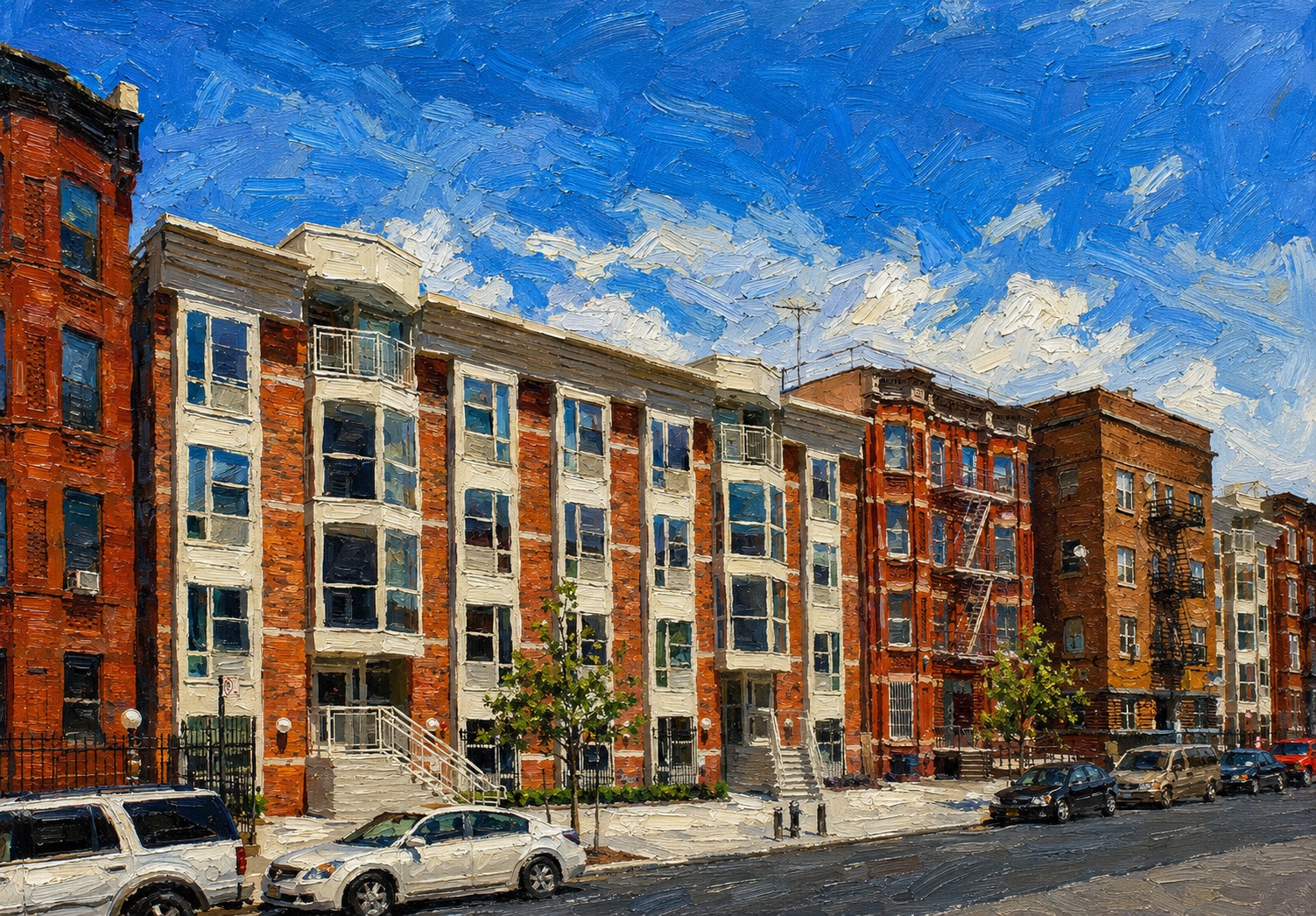
A detriment to building sufficient affordable housing is the long and laborious path projects must go through to reach completion.
A detriment to building sufficient affordable housing is the long and laborious path projects must go through to reach completion. Projects built via the Low-Income Housing Tax Credit (LIHTC), a major source of affordable housing, have multiple sources of financing and long and complicated processing requirements. In New York City, from the time an application is accepted to a construction start, two to three years can elapse.
Add to that the building out of a project, followed by complicated rent up protocols, and the total process, from start to being fully leased and operational, can take six years or more. If a project requires rezoning and/or sites transferred from public to private ownership, the time period may be even longer, with no guarantee of success.
Pricing for projects over such long periods is fraught with uncertainty, leading to highly conservative cost estimating. This reverberates throughout the affordable housing industry characterized by ever higher development costs. Thus, the call for more public subsidies to off-set those higher costs, while production still falls behind the need. The result: too much subsidy going to too few projects.
Contrast this with the speed of gentrification in many low and moderate-income communities. A small army of builders and developers looking for the next "hot" neighborhood buy and build market rate housing in residentially-zoned areas, often outpacing affordable housing production. Projects are done "as of right" with the only subsidy, if used at all, the now expired 421-a real estate tax benefit program. Projects typically take two to three years to completion.
How can affordable housing be built with the same speed and agility as occurs in many gentrifying areas? Below is a plan, not presented as a substitute for rezonings or LIHTC, but as a supplement to create more housing for low and moderate-income households.
First, designate low and moderate-income communities that are residentially zoned for low and mid-rise apartment buildings (R-5, R-6 and R-7) that contain both vacant and underbuilt lots where new housing may be built. NYU's Furman Center reports that in R-5 and R-6 zoned neighborhoods there are over 38,000 vacant and underbuilt lots, predominantly 20 to 25 feet wide and 70-100 feet deep. The potential to build new apartments on these sites, as well as on R-7 zoned sites, could number in the tens of thousands.
These areas, in communities such as east and central Brooklyn, The Bronx and Upper Manhattan, can be designated to receive incentives to build affordable housing. This is akin to the designation of neighborhood preservation areas in the 1970s to preserve deteriorating apartment buildings.
Second, pre-approve replicable prototypes that can be built on commonly available sites in the designated areas. The city's Department of Housing, Preservation and Development (HPD) can pre-approve designs and specifications for apartment buildings that can be built on available sites. On the 20-25 foot R-6 sites, a small set of prototypes can be designed to contain between four and eight residential units, and on the R-5 sites, three to four units. These buildings can fill-in the "missing teeth on a block" or create stretches of row houses for contiguous sites.
Third, incentivize qualified for-profit and non-profit owner/builders to build these prototypes as affordable housing. The state and city should enact an "as-of-right" long-term (30 to 35 years) real estate tax abatement and exemption program, similar to the now expired 421-a program, specific to building the affordable prototypes. This can be paired with the city's long established subsidized financing program (the Participation Loan Program "PLP") — combining market rate funds with 1 percent public funds to finance these developments.
Fourth, develop an opportunistic funding mechanism that can act quickly to purchase sites when market conditions are favorable. Today's high interest rates, and the absence of the city's 421-a tax incentive program for new construction, has created a window of opportunity to purchase privately owned sites at relatively low prices compared to the past few years.
Long term financing can be provided by the New York City and New York State public employee pension funds. Created in 1983, the New York City pension funds launched a program that can provide a forward committed long-term (up to 30 years) fixed-rate mortgage that provides a take out for the construction loan. This forward commitment protects affordable projects from spikes in interest rates.
Effective implementation of the proposed program will require leadership from the mayor's office, as occurred during the Koch/Dinkins era "vacant building" program. As this program matures, one might envision it becoming institutionalized as one of the primary tools to meet the city's diverse affordable housing needs.
Michael Lappin is the former CEO of the Community Preservation Corporation (1980-2011) and currently founding member of Lappin Associates, a provider of advisory services for affordable housing. During his tenure, CPC financed and developed over 90,000 affordable apartments in New York City.